
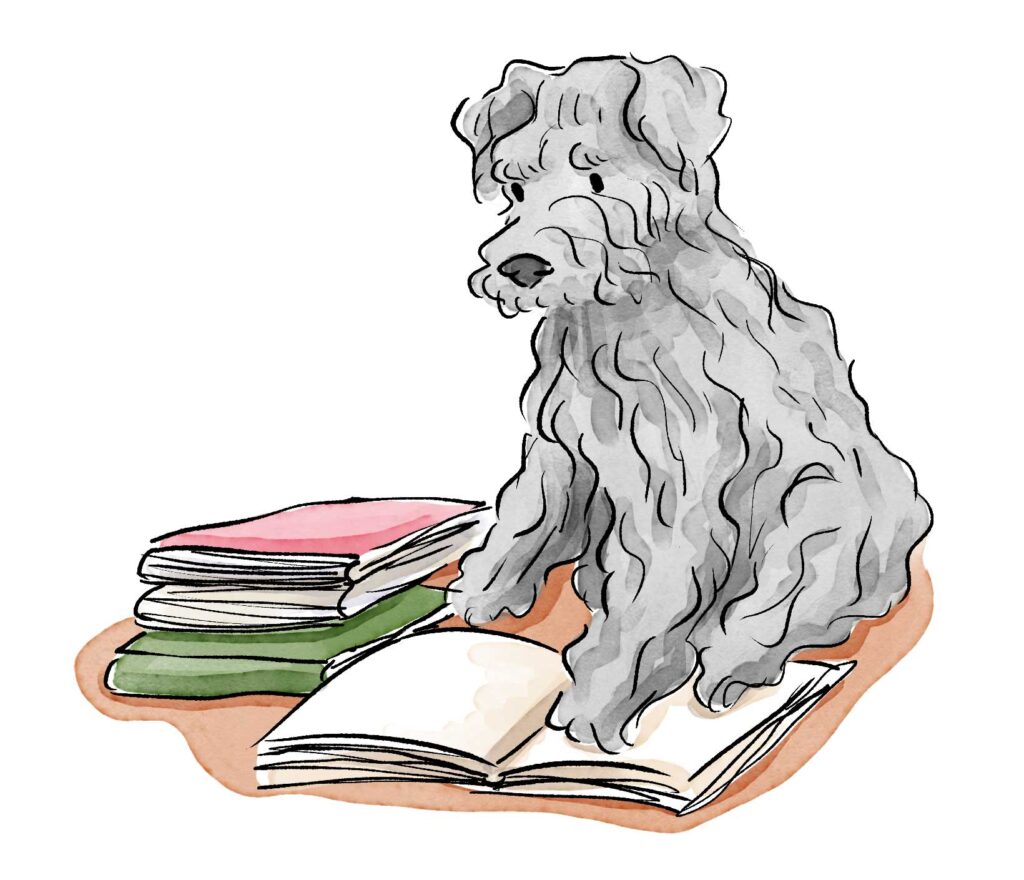
Ruffyard: I have been thinking, Doggins. Humans expect a great deal from us. Sit. Stay. Come. Leave it. Yet never once have I heard a human attempt a proper bark in return. Is this not a rather one-sided arrangement?
Doggins: It does seem unbalanced at first glance. They ask us to understand their words, while rarely learning ours. But perhaps the matter is not as simple as language alone.
Ruffyard: Not simple? I make my needs perfectly clear. A bark for warning, a whine for want, a wag for joy. What more could they possibly require?
Doggins: Words, Ruffyard, are only one form of communication. Humans build entire worlds out of them – stories, instructions, ideas that travel far beyond the moment.
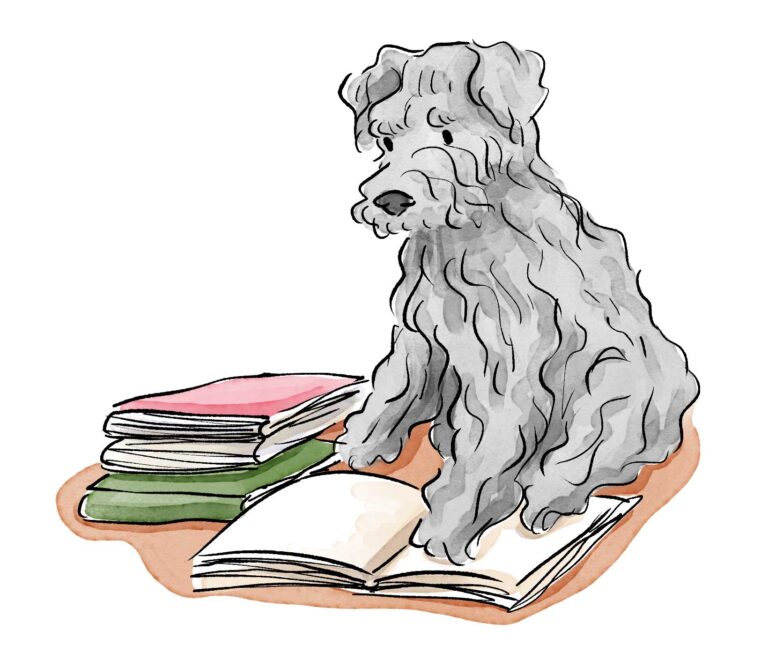
Ruffyard: Ah yes, their books. I have seen them turn pages with great seriousness, as though the paper itself holds secrets.
Doggins: In a way, it does. On World Book Day, they celebrate how words can connect minds across time and place. A story written long ago can still speak to someone today.
Ruffyard: That is impressive… though I suspect a well-timed bark could achieve similar results in far less time.
Doggins: A gentle pause. Perhaps. But books allow for something deeper. They let humans share thoughts they cannot bark, gesture, or wag into being.
Ruffyard: Then are you saying our language is… limited?
Doggins: Not limited. Different. We speak through tone, movement, presence. A lowered head can mean trust. A steady gaze can mean loyalty. We say much without a single word.
Ruffyard: And yet, misunderstandings happen. I bark to warn the postman, and suddenly I am told I am “being noisy.”
Doggins: Just as humans speak and are sometimes misunderstood. That is why they learn languages – to bridge the gaps between them.
Ruffyard: Then perhaps it is only fair. If we learn their words, should they not learn ours?
Doggins: Fairness would suggest so. But understanding does not always require fluency. Many humans already learn to read us – the wag of a tail, the tilt of an ear, the quiet sigh at the end of a long day.
Ruffyard: Hmmm. So communication is not about who speaks whose language best, but about whether we truly listen.
Doggins: Precisely. To understand another, one must look beyond words and notice what is being felt.
Ruffyard: Then a human reading a book and a dog reading a room are not so different after all.
Doggins: Both are acts of attention. Both are ways of saying, I am here, and I wish to understand.
Ruffyard: Very well, Doggins. I shall not insist that humans learn to bark… though I maintain I would be an excellent teacher.
Doggins: And I shall continue learning their words, while remembering that the truest conversations are often the quietest.
Ruffyard: Then let us agree on this – whether through books, barks, or something in between, understanding is the finest language of all.
Doggins: A language we would all do well to practise.